Nature, Forest Therapy & Social Connection
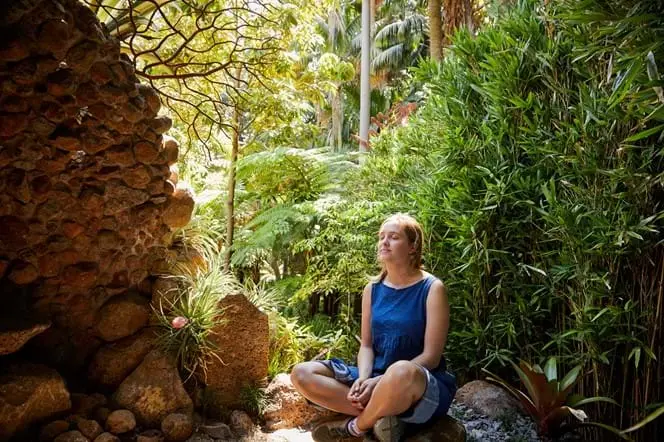
Making Room for Connection Every year, Loneliness Awareness Week Australia encourages an important national conversation. This year’s campaign, held from 3–9 August 2026, carries a simple yet powerful message: #MakeRoomForConnection. Organised by Ending Loneliness Together, the campaign reminds us that meaningful connection doesn’t always begin with grand gestures. Sometimes it starts with a conversation, an invitation, a shared walk, or simply creating space for someone to feel included. One statistic from this year’s campaign stands out. 1 in 2 Australians experience loneliness or social isolation. That tells us something important. Loneliness isn’t a rare experience. It is something many people encounter at different stages of life, often without those around them even knowing. Perhaps the question isn’t simply how we reduce loneliness. Perhaps it is how we create more opportunities for genuine human connection. Understanding Social Connection We often use the words alone and lonely interchangeably, but they describe very different experiences. Many people enjoy spending time alone. Solitude can be restorative, creative and peaceful. Loneliness, however, is the feeling that our social relationships do not meet our emotional need for connection. Someone may have family, colleagues and friends around them every day and still experience loneliness. Likewise, another person may spend much of their time alone without feeling lonely at all. This distinction matters because meaningful connection is about quality, not simply quantity. A Growing Public Health Conversation Research over the past decade has increasingly recognised loneliness as more than an emotional experience. It is now discussed alongside broader public health and community wellbeing. According to the Loneliness Awareness Week Australia 2026 campaign, loneliness can significantly affect mental wellbeing, with prolonged loneliness associated with an increased risk of depression. These conversations are encouraging communities, organisations and health professionals to think beyond individual responsibility and instead consider how we create places, programmes and experiences that help people connect. Why Nature Matters When we think about improving social connection, nature is not always the first solution that comes to mind. Yet growing research suggests that natural environments may play an important role in supporting both individual wellbeing and community connection. Green spaces encourage people to spend time outdoors, move more slowly and interact with others in ways that often feel less structured and less pressured than indoor environments. Parks become places where neighbours meet. Trails become places where conversations unfold. Gardens become places where communities grow together. Nature creates opportunities for connection that often happen naturally. What the Research Is Showing Evidence exploring the relationship between nature and social connection continues to grow. Large population studies have found associations between access to green spaces and lower levels of loneliness (Astell-Burt & Feng, 2020). A systematic review by Houlden and colleagues (2019) concluded that accessible green environments may support social wellbeing by encouraging recreation, relaxation and social interaction. More recently, Lavelle Sachs et al. (2024) reviewed research on nature-based social prescribing and found encouraging evidence that structured nature programmes can reduce loneliness and improve social connectedness, while also highlighting the need for continued research. Importantly, these studies suggest that it is not simply exposure to nature that matters. How people engage with nature appears to influence the experience and its potential benefits. Where Forest Therapy Fits At INFTA, this distinction is especially important. Forest Therapy is often described as spending time in nature, but it is much more than simply walking through a forest. It is a guided, evidence-informed practice that invites participants to slow down, engage their senses and experience nature with greater awareness. The emphasis is not on distance walked or physical fitness. Instead, it is on creating opportunities for presence, reflection and connection. While Forest Therapy should not be viewed as a treatment for loneliness, guided experiences in nature may provide supportive environments where people reconnect with themselves, with others and with the natural world. Emerging research continues to explore these possibilities. Stanley, Stanley and Vella-Brodrick (2025) found that structured group-based nature experiences contributed to improved wellbeing and social sustainability among young adults experiencing mild to moderate mental health challenges, highlighting the wider social value that intentional nature engagement can provide. This reflects an important principle that guides Forest Therapy. Nature alone has value. Guided engagement can deepen that experience. Creating More Room for Connection The theme #MakeRoomForConnection is ultimately an invitation. Not simply to talk about loneliness. But to create opportunities for belonging. This might mean: Inviting someone for a walk instead of a meeting. Spending more time in local parks and green spaces. Joining community activities. Volunteering. Making regular time for family and friends. Participating in guided nature experiences that encourage meaningful connection. Small actions often create lasting relationships. Looking Ahead Loneliness is unlikely to disappear overnight. But communities can become more connected through intentional choices. As research continues to explore the relationship between nature, wellbeing and social connection, one message is becoming increasingly clear: Connection grows where people have the opportunity to slow down, spend time together and experience meaningful moments. At INFTA, we believe nature offers one of those opportunities. Not because forests solve loneliness. But because they create space—for presence, conversation, reflection and human connection. Sometimes making room for connection begins by making room for nature. Campaign Resource Ending Loneliness Together. (2026). Loneliness Awareness Week Australia 2026: Social Disconnection in Australia – Snapshot 2026 (Infographic). Retrieved from: https://lonelinessawarenessweek.com.au/wp-content/uploads/2026/07/LAW-2026-Infographic.pdf References Stanley, J. K., Stanley, J. R., & Vella-Brodrick, D. (2025). Nature Scripts to Promote Social Sustainability: Monetizing Wellbeing Benefits of Group-Based Nature Exposure for Young Adults with Mild to Moderate Mental Illness. Sustainability, 17(22), 9988. Lavelle Sachs, J., et al. (2024). Nature-based social prescribing for loneliness: A systematic review. Landscape and Urban Planning, 245, 105991. Astell-Burt, T., & Feng, X. (2020). Association of green space with loneliness: A cross-sectional analysis of 400,000 adults. The Lancet Planetary Health, 4(12), e567–e575. Bu, F., Zaninotto, P., & Fancourt, D. (2021). Longitudinal associations between loneliness, social isolation, and green social prescribing activities. Journal of Public Health, 43(4), e723–e731. Houlden, V., Weich, S., Porto de Albuquerque, J., Jarvis, S.,
Forest Therapy Guide Training in Melbourne
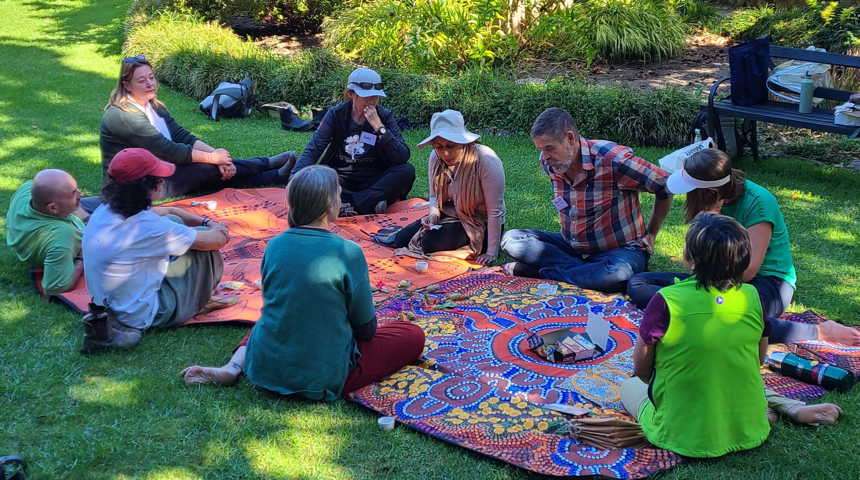
INFTA and its Accredited Training Provider for Australia, Asia and the Americas, the Institute of Forest Therapy, are pleased to announce the first exclusive, in-person training workshop for Forest Therapy Guides in Melbourne. This workshop takes place right in the heart of Melbourne, with the practical training elements to be conducted at the ideally located Royal Botanic Gardens Melbourne. This internationally acclaimed Botanical Gardens is the global centre for Forest Therapy sessions offered regularly since 2019. Sign up now for participating in this unique Forest Therapy Guide training workshop, extending your skills and competencies with a special focus on the practical elements and how to conduct Forest Therapy sessions successfully for the Public, educational and corporate clients.
INFTA promotes regional development in Goa/India
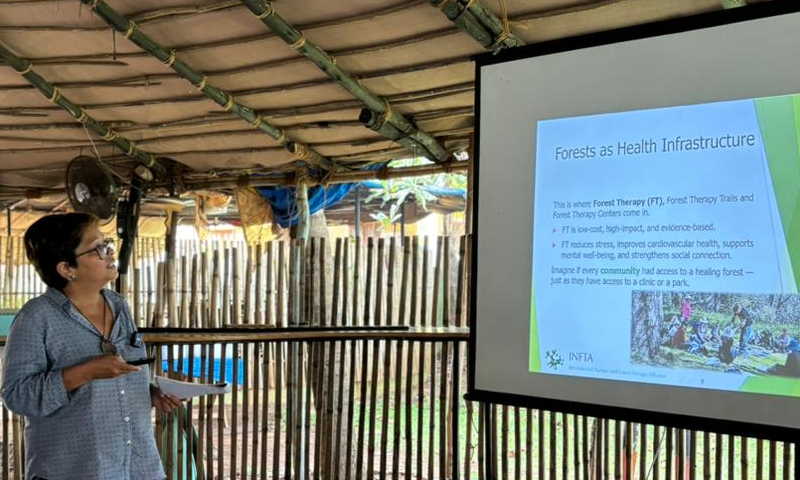
On the invitation by Peter Kenyon OAM and Australian of the Year 2017, INFTA´s President, Susan Joachim, gave a keynote speech on the economic, health and community benefits, Forest Therapy Centers have for regional development. Her presentation titled “From Japan to Goa: Our Forests Are Incredible Assets for Building Community Health and Connection” was well received as part of the Asset Based Community Development festival held in Goa/India, 27-30 January 2026. Community leaders from Australia and Asia can request a copy of the presentation from INFTA.