Forest Therapy Summer Program in the USA
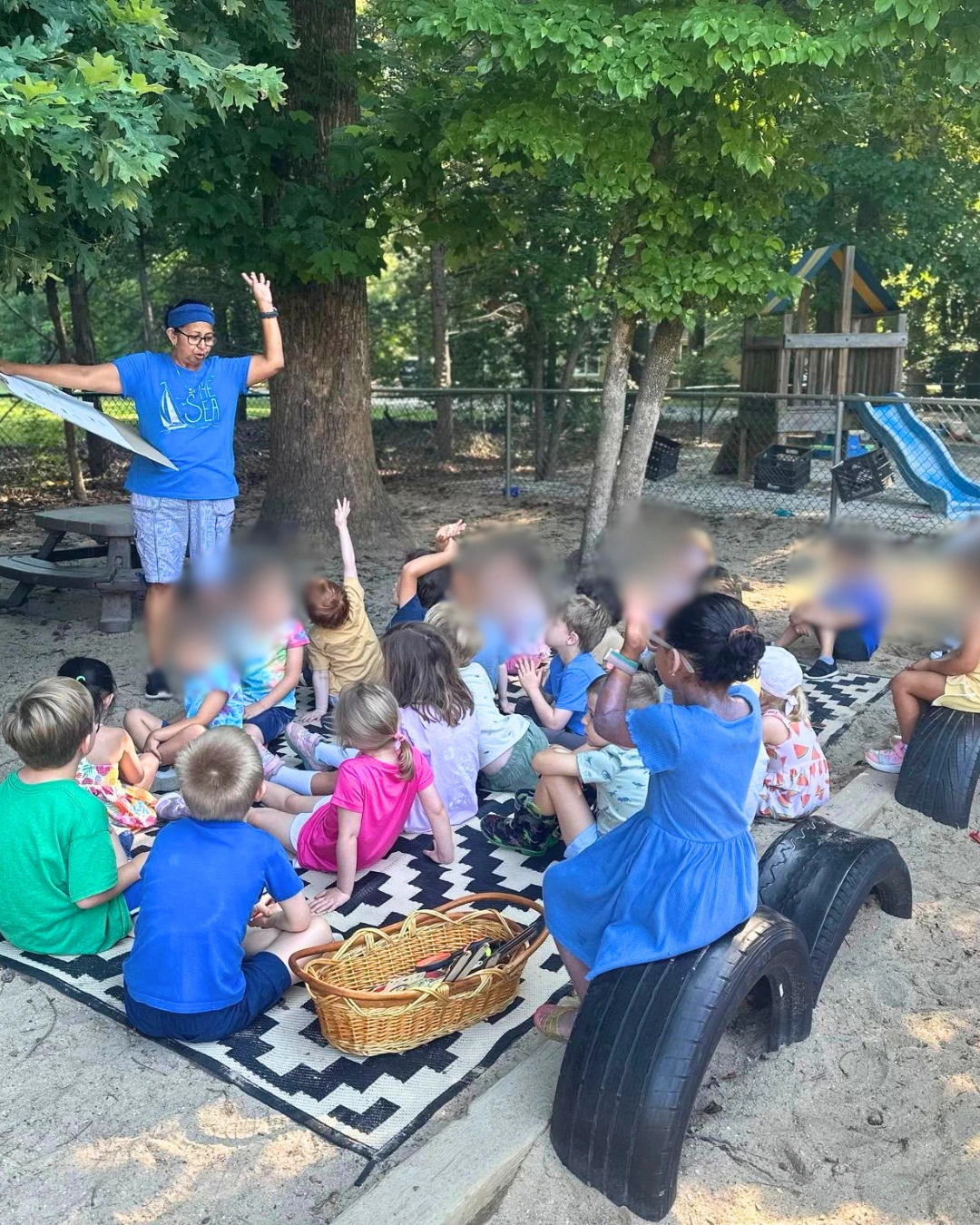
Just a few weeks ago, INFTA-Certified Forest Therapy Guide, Mrs. Salome Fernando, facilitated a two-week “Nature & the Five Senses” summer program in Virginia, USA for 35 children aged 3–6. Reflecting on the program, Mrs. Fernando shared these highlights and the impact such programs have on building nature connection in young children. Our two-week Nature Summer Program, “Nature & the Five Senses,” was a tremendous success. The children arrived each morning excited to discover the day’s new adventure, with each experience designed to encourage hands-on exploration, creativity, and a deeper appreciation for the natural world through their senses. Favorite activities included nature scavenger hunts, nature journaling, exploring the mud kitchen, bark rubbing, painting with mud, and sensory walks. These experiences inspired careful observation, imaginative play, problem-solving, and meaningful engagement with the children’s surroundings. One especially joyful moment came when a child found a frog and excitedly called the other children over to see it. They all gathered around, delighted, before the frog was gently moved to a more frog-friendly area. Lasting Impact The most rewarding outcome has been seeing the impact continue long after the program ended. Children still come to me on the playground to excitedly share their discoveries — interesting leaves, snails, bugs, frogs, bird nests, and other treasures they find. Their excitement to observe and investigate has become a natural part of their day, a clear sign they are looking at the world with greater curiosity and awareness. The program encouraged children to slow down, ask questions, and make connections with the natural world — skills that support observation, classification, and independence in a Montessori environment. Rather than ending with the final day of camp, their enthusiasm for exploring nature has continued to grow, extending into their everyday experiences. Looking Ahead Watching their curiosity continue beyond the two-week camp has been the greatest measure of its success. The Nature Summer Program nurtured a lasting sense of wonder and curiosity while helping children build a meaningful relationship with the natural world.” Look out for our next story on ways to connect children to nature as an INFTA-Certified Forest Therapy Guide. —————– Find out what decades of research reveal about children learning best when the world becomes their classroom. Turn Learning Inside Out in Schools | Children & Nature Network https://www.childrenandnature.org/schools/
Nature, Forest Therapy & Social Connection
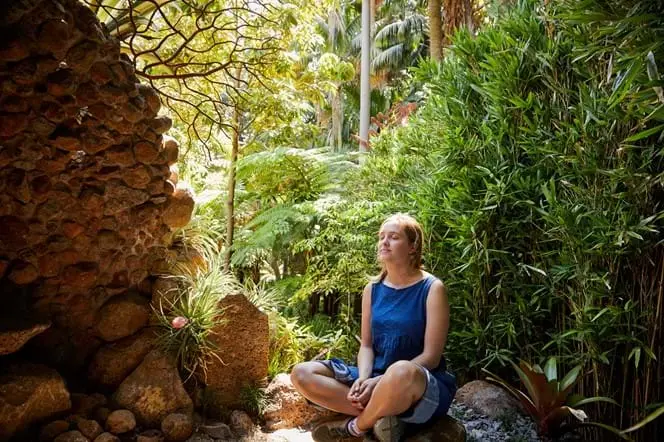
Making Room for Connection Every year, Loneliness Awareness Week Australia encourages an important national conversation. This year’s campaign, held from 3–9 August 2026, carries a simple yet powerful message: #MakeRoomForConnection. Organised by Ending Loneliness Together, the campaign reminds us that meaningful connection doesn’t always begin with grand gestures. Sometimes it starts with a conversation, an invitation, a shared walk, or simply creating space for someone to feel included. One statistic from this year’s campaign stands out. 1 in 2 Australians experience loneliness or social isolation. That tells us something important. Loneliness isn’t a rare experience. It is something many people encounter at different stages of life, often without those around them even knowing. Perhaps the question isn’t simply how we reduce loneliness. Perhaps it is how we create more opportunities for genuine human connection. Understanding Social Connection We often use the words alone and lonely interchangeably, but they describe very different experiences. Many people enjoy spending time alone. Solitude can be restorative, creative and peaceful. Loneliness, however, is the feeling that our social relationships do not meet our emotional need for connection. Someone may have family, colleagues and friends around them every day and still experience loneliness. Likewise, another person may spend much of their time alone without feeling lonely at all. This distinction matters because meaningful connection is about quality, not simply quantity. A Growing Public Health Conversation Research over the past decade has increasingly recognised loneliness as more than an emotional experience. It is now discussed alongside broader public health and community wellbeing. According to the Loneliness Awareness Week Australia 2026 campaign, loneliness can significantly affect mental wellbeing, with prolonged loneliness associated with an increased risk of depression. These conversations are encouraging communities, organisations and health professionals to think beyond individual responsibility and instead consider how we create places, programmes and experiences that help people connect. Why Nature Matters When we think about improving social connection, nature is not always the first solution that comes to mind. Yet growing research suggests that natural environments may play an important role in supporting both individual wellbeing and community connection. Green spaces encourage people to spend time outdoors, move more slowly and interact with others in ways that often feel less structured and less pressured than indoor environments. Parks become places where neighbours meet. Trails become places where conversations unfold. Gardens become places where communities grow together. Nature creates opportunities for connection that often happen naturally. What the Research Is Showing Evidence exploring the relationship between nature and social connection continues to grow. Large population studies have found associations between access to green spaces and lower levels of loneliness (Astell-Burt & Feng, 2020). A systematic review by Houlden and colleagues (2019) concluded that accessible green environments may support social wellbeing by encouraging recreation, relaxation and social interaction. More recently, Lavelle Sachs et al. (2024) reviewed research on nature-based social prescribing and found encouraging evidence that structured nature programmes can reduce loneliness and improve social connectedness, while also highlighting the need for continued research. Importantly, these studies suggest that it is not simply exposure to nature that matters. How people engage with nature appears to influence the experience and its potential benefits. Where Forest Therapy Fits At INFTA, this distinction is especially important. Forest Therapy is often described as spending time in nature, but it is much more than simply walking through a forest. It is a guided, evidence-informed practice that invites participants to slow down, engage their senses and experience nature with greater awareness. The emphasis is not on distance walked or physical fitness. Instead, it is on creating opportunities for presence, reflection and connection. While Forest Therapy should not be viewed as a treatment for loneliness, guided experiences in nature may provide supportive environments where people reconnect with themselves, with others and with the natural world. Emerging research continues to explore these possibilities. Stanley, Stanley and Vella-Brodrick (2025) found that structured group-based nature experiences contributed to improved wellbeing and social sustainability among young adults experiencing mild to moderate mental health challenges, highlighting the wider social value that intentional nature engagement can provide. This reflects an important principle that guides Forest Therapy. Nature alone has value. Guided engagement can deepen that experience. Creating More Room for Connection The theme #MakeRoomForConnection is ultimately an invitation. Not simply to talk about loneliness. But to create opportunities for belonging. This might mean: Inviting someone for a walk instead of a meeting. Spending more time in local parks and green spaces. Joining community activities. Volunteering. Making regular time for family and friends. Participating in guided nature experiences that encourage meaningful connection. Small actions often create lasting relationships. Looking Ahead Loneliness is unlikely to disappear overnight. But communities can become more connected through intentional choices. As research continues to explore the relationship between nature, wellbeing and social connection, one message is becoming increasingly clear: Connection grows where people have the opportunity to slow down, spend time together and experience meaningful moments. At INFTA, we believe nature offers one of those opportunities. Not because forests solve loneliness. But because they create space—for presence, conversation, reflection and human connection. Sometimes making room for connection begins by making room for nature. Campaign Resource Ending Loneliness Together. (2026). Loneliness Awareness Week Australia 2026: Social Disconnection in Australia – Snapshot 2026 (Infographic). Retrieved from: https://lonelinessawarenessweek.com.au/wp-content/uploads/2026/07/LAW-2026-Infographic.pdf References Stanley, J. K., Stanley, J. R., & Vella-Brodrick, D. (2025). Nature Scripts to Promote Social Sustainability: Monetizing Wellbeing Benefits of Group-Based Nature Exposure for Young Adults with Mild to Moderate Mental Illness. Sustainability, 17(22), 9988. Lavelle Sachs, J., et al. (2024). Nature-based social prescribing for loneliness: A systematic review. Landscape and Urban Planning, 245, 105991. Astell-Burt, T., & Feng, X. (2020). Association of green space with loneliness: A cross-sectional analysis of 400,000 adults. The Lancet Planetary Health, 4(12), e567–e575. Bu, F., Zaninotto, P., & Fancourt, D. (2021). Longitudinal associations between loneliness, social isolation, and green social prescribing activities. Journal of Public Health, 43(4), e723–e731. Houlden, V., Weich, S., Porto de Albuquerque, J., Jarvis, S.,
Forest Therapy Guide Training in Melbourne
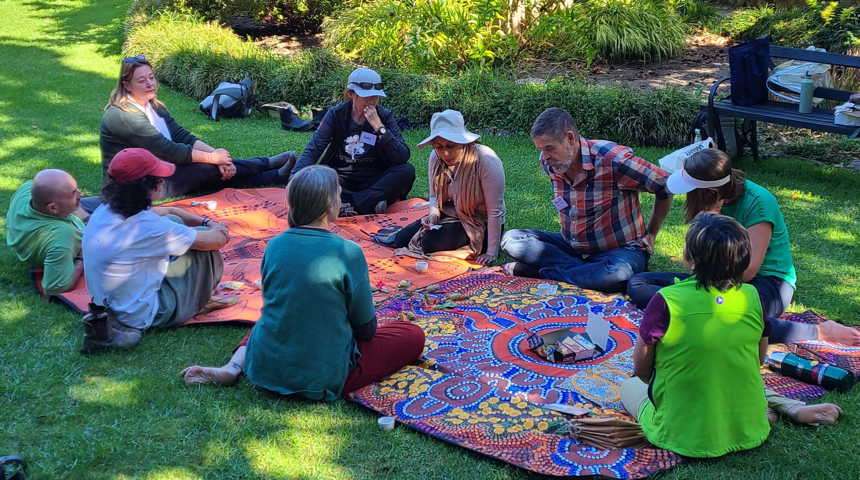
INFTA and its Accredited Training Provider for Australia, Asia and the Americas, the Institute of Forest Therapy, are pleased to announce the first exclusive, in-person training workshop for Forest Therapy Guides in Melbourne. This workshop takes place right in the heart of Melbourne, with the practical training elements to be conducted at the ideally located Royal Botanic Gardens Melbourne. This internationally acclaimed Botanical Gardens is the global centre for Forest Therapy sessions offered regularly since 2019. Sign up now for participating in this unique Forest Therapy Guide training workshop, extending your skills and competencies with a special focus on the practical elements and how to conduct Forest Therapy sessions successfully for the Public, educational and corporate clients.
INFTA promotes regional development in Goa/India
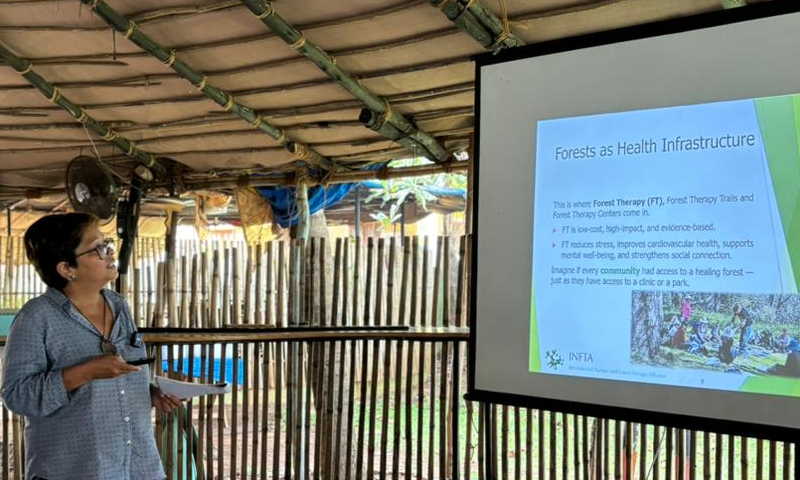
On the invitation by Peter Kenyon OAM and Australian of the Year 2017, INFTA´s President, Susan Joachim, gave a keynote speech on the economic, health and community benefits, Forest Therapy Centers have for regional development. Her presentation titled “From Japan to Goa: Our Forests Are Incredible Assets for Building Community Health and Connection” was well received as part of the Asset Based Community Development festival held in Goa/India, 27-30 January 2026. Community leaders from Australia and Asia can request a copy of the presentation from INFTA.
INFTA-Certified Forest Therapy Tourist Guide training for Vietnam
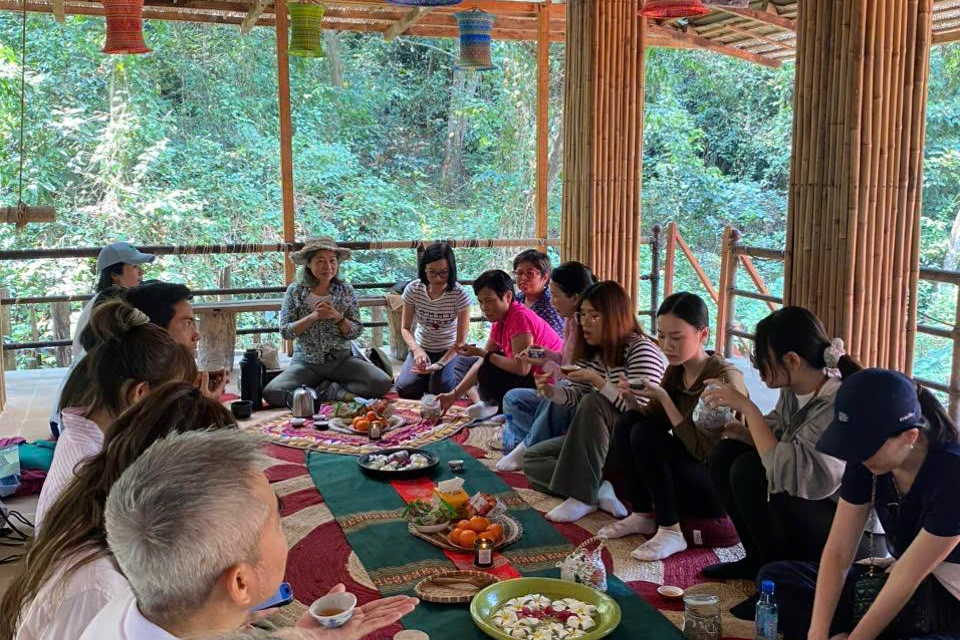
In order to advance training options for INFTA-Certified Forest Therapy Tourist Guide, INFTA´s President, Susan Joachim, paid a visit to “Fairyland”, a leading eco-resort in a forested area outside Ho Chi Minh City in Vietnam. Hosted by the first INFTA-Certified and Accredited Forest Therapy Guide in Vietnam, Mrs. Van Tran Minh, INFTA´s President had the opportunity to take part in a Forest Therapy session organized for participants seeking to de-stress, relax and experience the tranquility and clean mountain air around “Fairyland” – a most welcome get-away from the noise and pollution of the metropolitan settings in Ho Chi Minh City. Some 20 participants enjoyed the Forest Therapy session and shared a communal tea ceremony at the end of the event (see photo). In her discussion with Vietnamese stakeholders and people interested in the benefits of Forest Therapy, INFTA´s President pointed out the growing importance for training INFTA-Certified Forest Therapy Tourist Guides given the sectoral growth of the global health & wellbeing economy to more than USD 7 trillion in 2026. To find out more and apply, please click here.
INFTA-Certified Forest Therapy Tourist Guide training for the Global South
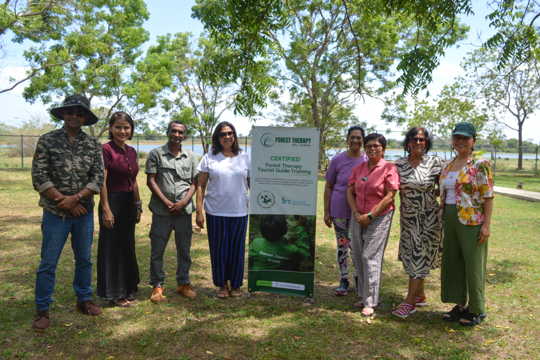
Open for applications now, INFTA is proud to offer the new Forest Therapy Tourist Guide (FTTG) training, an advanced professional pathway designed for those ready to thrive in the global health & wellbeing and wellness tourism sector. As demand grows in global wellness economy – projected to reach about USD 7 trillion in 2026 -, with wellness tourism being a major contributor, this training prepares practitioners to meet rising opportunities anywhere in the world. Delivered entirely supervised and mentored online through INFTA’s innovative Learning Management System, the FTTG course is accessible 24/7 from any location on standard digital devices. Over three months, trainees complete 168 mentored lessons, practical tasks, live mentoring and assessment, and receive comprehensive training material and access to INFTA’s extensive research database. Successful participants graduate with the INFTA Forest Therapy Tourist Guide Certificate and institutional accreditation. This internationally recognised qualification equips guides with the competencies to create safe, evidence-based Forest Therapy experiences tailored to tourists, enhancing eco-wellbeing offerings for resorts, spas, wellness centres and tour operators. Graduates can immediately tap into the expanding health & wellbeing tourism markets while contributing to Public health through nature connection practices. Begin your journey in this dynamic sector—anytime, anywhere. To find out more and apply, please click here.
Supporting youth mental health through social media detox and Forest Therapy
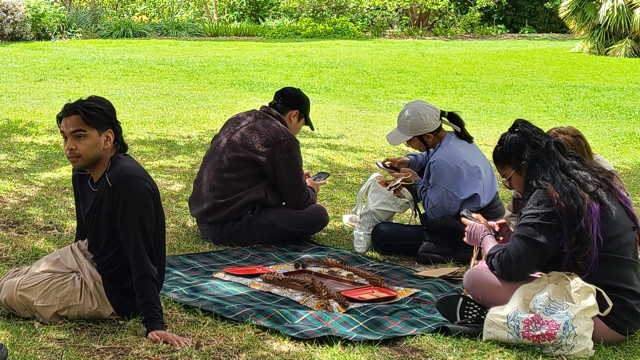
Recent research published in JAMA Network Open (2025) highlights growing evidence that structured social media detox initiatives can support improved mental health outcomes among young people. As communities respond to rising concerns around youth wellbeing, research and practice increasingly show that reducing screen time alone is not enough—what replaces digital engagement plays a critical role in shaping long-term outcomes. Guided Forest Therapy offers a research-informed, community-based complement to social media detox programs. Through intentional, sensory engagement with natural environments, Forest Therapy supports nervous system regulation, emotional awareness, attention restoration, and social connection—key protective factors for youth mental health. Delivered by trained practitioners and grounded in international standards, Forest Therapy provides a safe, inclusive, and non-clinical space that reframes “detox” as reconnection rather than deprivation. INFTA recognises Forest Therapy as an evidence-based public health practice, supported by a dynamic international training model that evolves alongside emerging research. This adaptive approach enables Forest Therapy to be ethically and effectively applied across demographics, settings, and cultures—including youth, community groups, and diverse populations—while maintaining consistency, quality, and professional integrity. As schools, youth services, local councils, and community organisations explore sustainable, preventive responses to youth mental health challenges, integrating guided Forest Therapy into social media detox initiatives represents a promising, low-risk, and scalable pathway toward lasting wellbeing. References: Calvert E, Cipriani M, Dwyer B, et al. Social Media Detox and Youth Mental Health (2025). JAMA Netw Open;8(11):e2545245. doi:10.1001/jamanetworkopen.2025.45245 Kil, N., Kim, J.G., Thornton, E., Jeranek, A. (2023). Psychological and Physiological Health Benefits of a Structured Forest Therapy Program for Children and Adolescents with Mental Health Disorders. International Journal of Mental Health Promotion, 25(10), 1117–1125. https://doi.org/10.32604/ijmhp.2023.022981
Green space is not a luxury — but Public health

A Finnish study adds striking evidence to something many of us intuitively know: contact with urban nature isn’t a luxury, it’s a Public health strategy with measurable mental and physical health benefits. It’s no surprise that researchers around the world are no longer just tracking whether people experience anxiety or depression, but why these conditions are rising — and what cities can do about it. What did the Finnish study find? Researchers analyzed responses from more than 16,000 residents in Helsinki and the surrounding area. They found that people who visited parks, community gardens, forests, or other green spaces three to four times a week had significantly lower use of prescription drugs compared to those who visited less than once a week: 33% lower odds of using medication for anxiety, depression, or insomnia 36% lower odds of use of hypertension medication 26% lower odds of using asthma medication What really stood out was that the strongest benefits were seen among lower-income residents, suggesting that access to green space could help reduce health inequalities — not just medication use. Prescription drug use was used as a proxy for ill health, meaning people spending more time in nature tended to rely less on medications for mental stress and cardiovascular conditions. Why this matters now These findings land at a time when mental health challenges are increasing worldwide: Nearly 1 billion people worldwide live with a mental disorder such as anxiety or depression (World Health Organization – WHO). The COVID-19 pandemic triggered an estimated 25% rise in anxiety and depression in its first year (WHO). Urban living — with its density, noise, pollution, and social isolation — is consistently linked to higher rates of stress-related mental health conditions (World Economic Forum). Together, this tells me that cities need solutions beyond clinics and prescriptions — solutions that address environmental and social stressors at their roots. Green space as a Public health investment Spending time in parks and gardens appears to reduce stress even without intense physical activity. And because lower-income communities often have the least access to quality green space, investing in these environments can also promote health equity. With more than half the world’s population now living in cities — a figure expected to approach 60% by 2030 — the mental health burden of urban life will only grow without structural interventions. What this means for Urban Planning Urban planning needs to treat green space as essential infrastructure. That means: Ensuring everyone can reach a green or blue space within walking distance, Designing spaces that feel safe, inclusive, and well maintained Correcting inequities in where green space is located Integrating greenery into every day routes, not just destination parks Supporting initiatives like social prescribing that encourage time outdoors A question for all of us This research reinforces a simple but powerful idea: nature supports health in measurable ways, including reduced reliance on medication. As mental health pressures continue to rise, cities have both an opportunity and a responsibility to design for well-being. So, the question is: what can citizens do — or get involved in — to ensure city planners and public officials take this kind of research seriously when planning for the future? In an era of rising anxiety and depression, urban green space is more than beauty. It is prevention. Reference: Turunen, A. W., Halonen, J., Korpela, K., Ojala, A., Pasanen, T., Siponen, T., Tiittanen, P., Tyrväinen, L., Yli-Tuomi, T., & Lanki, T. (2023). Cross-sectional associations of different types of nature exposure with psychotropic, antihypertensive and asthma medication. Occupational and environmental medicine, 80(2), 111–118. https://doi.org/10.1136/oemed-2022-108491
INFTA completed innovative research project
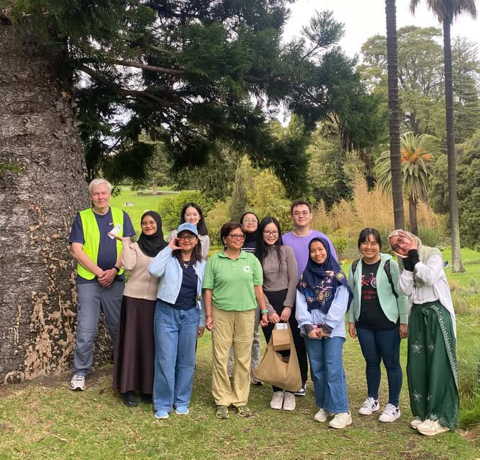
INFTA has successfully completed the data collection for the research project termed “Effective Stress Reduction in Nature“. This project aimed at effectively bringing down stress levels of international students to improve their mental and physical health. It was partially funded by a grant of the Department of Jobs, Skills, Industry and Region in Victoria. It was part of the Study Melbourne Inclusion Program which has funded 162 projects to the value of $7.3 million and supported more than 235,000 international students since its inception in 2015. INFTA led a consortium of researchers and executive staff from Deakin University, RMIT, Federation University and the Royal Botanic Gardens Melbourne. Free Forest Therapy sessions were offered to international students in Melbourne but also in Ballarat and Geelong so that students studying at regional campuses were able to take part. Ethics clearance for this important clinical trial was obtained from the regional health provider, Barwon Health. We thank all international students who supported this research project. A summary report will be provided to international students at the end of January 2026 with an international publication in a Q1 journal to follow during the first half of this year.
Forest Therapy – effective in Germany
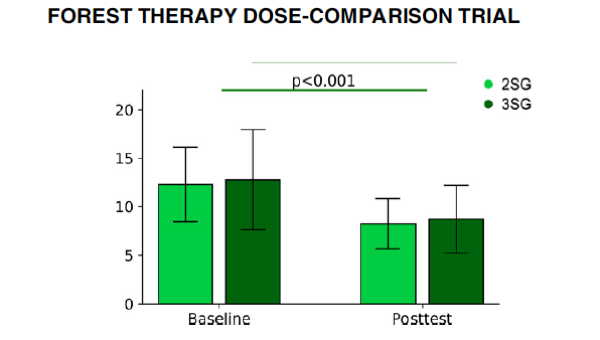
INFTA is proud about the release of the first scientific article which underscores the effectiveness of Forest Therapy in Germany. In 2020 and on the initiative of INFTA’s Secretary & International Strategic Advisor, Dr. Dieter Kotte, INFTA (Germany) and Charité Berlin teamed up to conduct the first national research project in Forest Therapy, federally funded through the Waldklimafonds in Germany. The article “Effects of Forest Therapy on Participant-Reported Outcomes: A Randomized Controlled Dose-Comparison Trial Among the General Population in Germany” summarizes the findings which have just been published internationally in the Journal of Integrative and Complementary Medicine. The results underscore the effectiveness of INFTA’s standardized Forest Therapy sessions and pave the way for further clinical studies to determine, for example, the most appropriate dosage for patients/people with mental health issues. Furthermore, the results also strongly endorse the use of standardized Forest Therapy sessions for prevention of lifestyle-related diseases. Overall, the findings from the national German research underline the effectiveness and applicability of Forest Therapy as an evidence-based Public health practice.